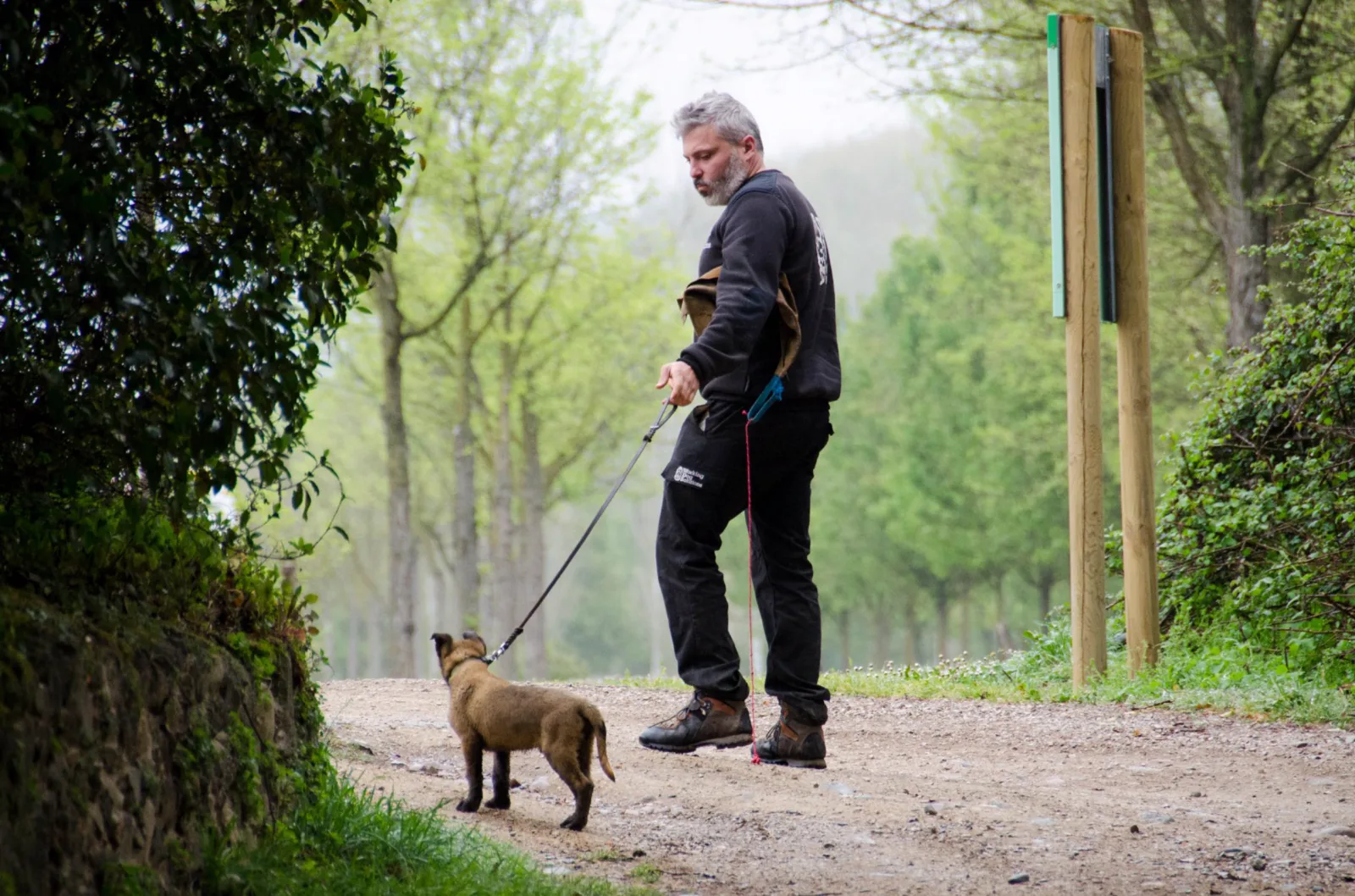

Choosing a puppy for its appearance often creates unrealistic expectations. A sound decision begins with the life the dog will have and the temperament most likely to suit it.
Describe your real life
Time alone, activity, experience, children, other animals and available space are more useful than an idealised wish list.
Observe temperament and recovery
Watch how the puppy explores, responds to novelty, interacts and settles again. These observations must be interpreted alongside genetics and early development.
Ask for information and follow-up
A responsible breeder or selector explains health, origin, expected temperament and limitations. They should also be able to say that a particular puppy is not right for a particular family.
Frequently asked questions
Common questions
Is the calmest puppy always best for a family?
Not necessarily. You need to understand why the puppy is calm, how it responds in different contexts and what its activity level may be as it develops.